Creators are the best marketers. Literally all they do is market.
And they’re good at it too. Look at someone like MrBeast: his videos are built around how they will be marketed. The title, thumbnail, and overall promotion are all marketing. The actual content is fulfilling the promise he set up in marketing. When you look at how successful those videos are (and how successful his businesses are overall), it’s not implausible to call him the best marketer in the world.
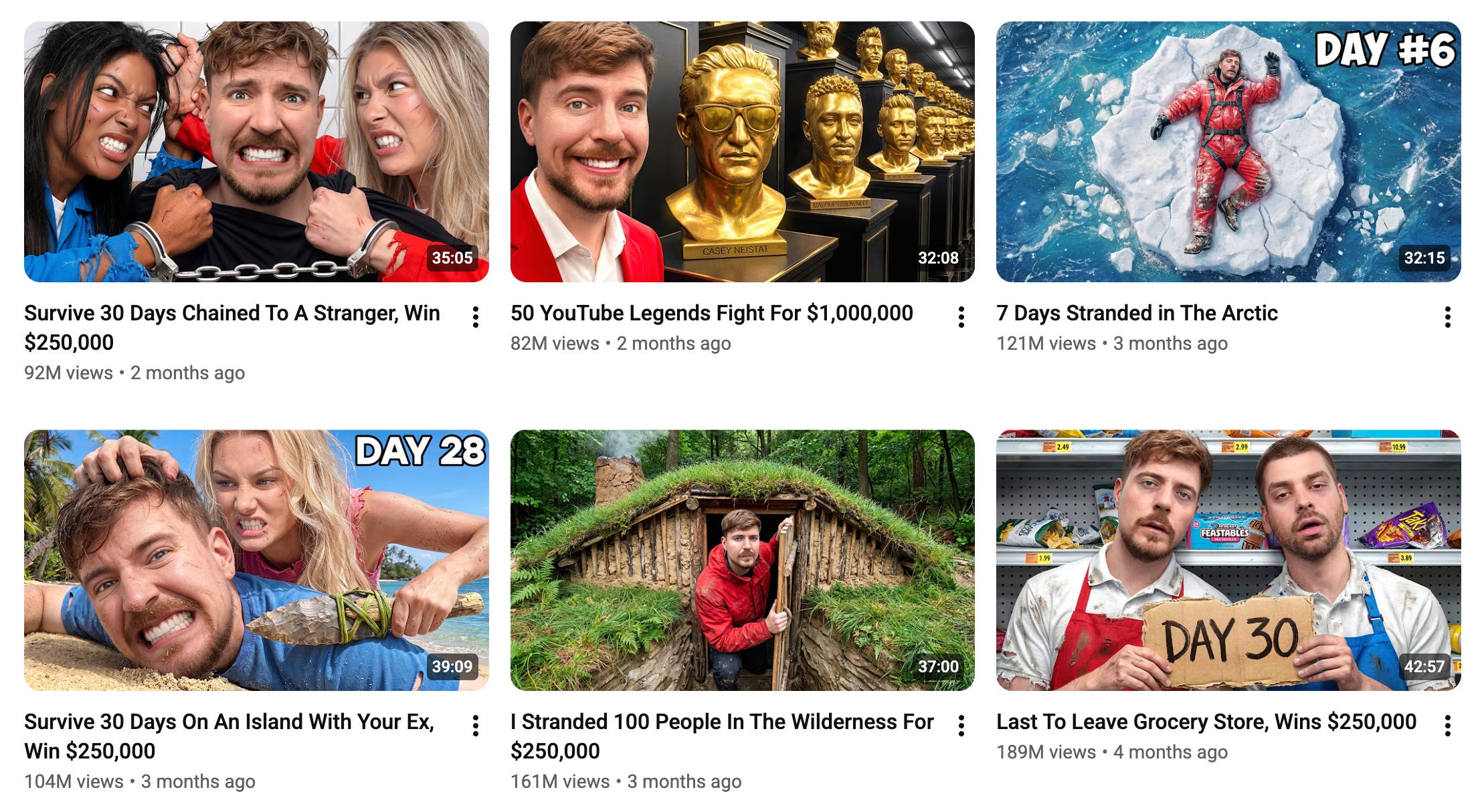
It’s not just that the best creators are the best marketers, nearly every creator is better at marketing than the average marketer. They have fewer resources, less time, and still manage to capture more attention.
Instead of looking at what other competitors and marketers are doing, companies should look at what creators are doing and copy them instead. Here’s what I think matters most and why companies struggle to match it.
Playing the algorithm
Companies are frustratingly rigid. They have some idea of what marketing should look like and do that endlessly regardless of whether it’s successful or not. You see companies that raised billions of dollars tweeting out stuff that nobody cares about with hashtags like it’s 2009.


Creators play the algorithm much more. They’re more free to do just what gets attention. They hop on trends. They post their best stuff repeatedly. They find a format that works and exploit it. See the success clipping has had on promoting podcasts and livestreamers.
Companies mostly fail at this because they are too slow. They have quarterly (or yearly) goals and KPIs they need to show ROI on. They are stuck in their plans and don’t have space to chase some idea for capitalizing on a trend or algorithm change.
Being opinionated
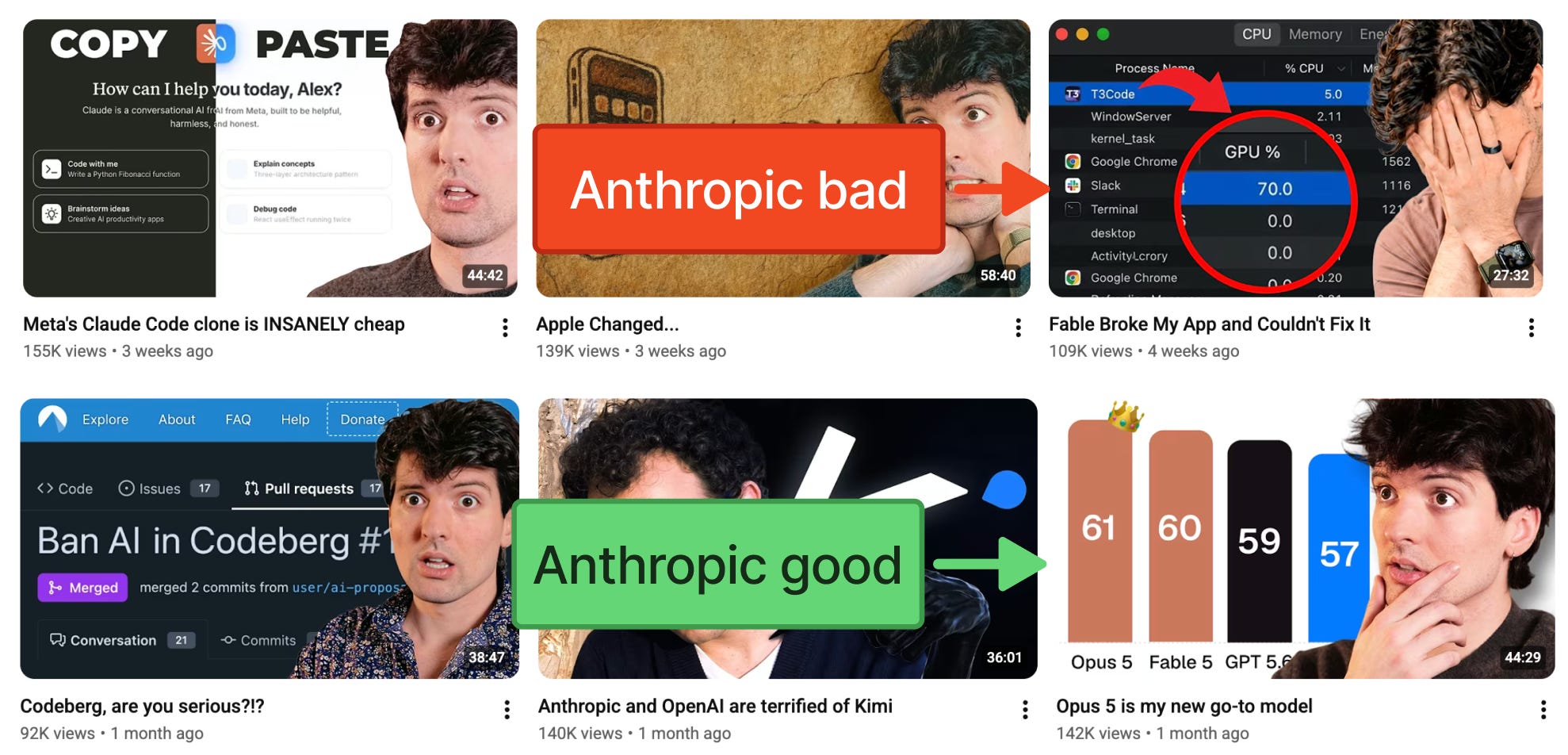
Creators capture a lot of attention by being opinionated. They share their opinion on the best restaurants in the city, their views on news, the AI agent workflows “you must try,” and their company criticisms. They have the freedom to change their opinions over time. Look at Theo as an example. He might praise Anthropic one week and criticize it the next.
Companies are not usually this opinionated. Even when they are, opinions usually come from the top down. Managers and executives don’t want lower-level employees making opinionated declarations for the whole company. Opinions either need to come as a directive from the boss or make their way up the approval chain.
This is because companies are much more concerned about potential blowback than creators are. A few negative tweets can raise alarms and have managers breathing down your neck. For creators, that’s just an average day.
Companies want everyone to like them. This leads to marketers creating safer, less opinionated content with the downside of it getting less attention. Creators know that some haters are good for business and care more about capturing the potential upside of strong opinions.
Beyond this, there’s just less for marketers to criticize. A company criticizing another company would come across as petty, disingenuous, and self-serving at best, especially when talking about your industry or competitors.
Creators are scrappier
Paul Graham said great founders are relentlessly resourceful and that is what a lot of creators are. Creators are lean, focused, prolific. These are things marketers usually aren’t. Marketers have budgets, approval processes, brand guidelines, and quality standards.
Being scrappy improves upside. Creators have the potential for more with less. Look at how many viral videos are just a person talking to an iPhone. Many marketers need a plan, script, and camera equipment to do the same. They’re not just posting reaction videos to the company account.
It’s this scrappiness that lets them operate sort of like an ideal startup: test ideas, get feedback, and iterate. The investment in any individual piece of content is low, so a flop isn’t a big loss.
Companies, especially big ones, lose this scrappiness. They have brand standards they need to be consistent with and a reputation to uphold. While this is the case, creators will continue to lap them.
Hire creators rather than marketers
How do companies fix all this? They are realizing they can just hire creators and give them more freedom to work.
OpenAI acquiring TBPN is a big example; tl;dv hiring 3 TikTokers is a smaller one, but the “startup insurance” company Corgi might be the best case study in this:
They know a big part of their target market is in San Francisco and on X.
They hire marketers who appeal to this target market with posts like “just got to SF, what is there to do here?“, comments on SF dating discourse, and shitposting.
The Corgi Cafe is an IRL space that has become a meme and great source of content, planting them in the middle of SF Twitter discourse. Meanwhile, investors “absolutely hated“ the idea.
People hate and dunk on them, but the controversy they generate gets them a lot of attention.


Why is “just hire creators” hard?
Because if someone was a good enough creator to be on their own, why wouldn’t they just work for themselves? The upside is higher and they’d have more freedom.
You have to give them freedom and take the potential blowback from it. People criticize Corgi by saying they don’t understand why an insurance company needs so many people posting on X or an in-person cafe. What works might have nothing to do with the business.
It often takes an extremely long time to find content-audience-business fit. Normal creators have more freedom: they don’t have a business to worry about. It took tl;dv 102 videos until “the ball was truly rolling.”
Make your marketing look more like creators
If you aspire to compete in the global market for attention, you shouldn’t compare yourself against competitors, but creators. This means you need to make your marketing look more like them.
PostHog has a newsletter on Substack because that is what the creators like Lenny do.
Supabase posts developer memes because that is what creators do.
tl;dv and Cluely see much more success than other B2B startups on TikTok and Shorts because they do skits like creators do (shout out Ling Long).
Audiences don’t care about your generic B2B SaaS whitepaper, however convenient or “aligned” it is for you to write. They want to consume more of the content they like, and if you can produce it, that’s great.
This isn’t to say it is easy. I’ve seen multiple competitors start a newsletter on Substack and quickly fizzle out. Creators become your new competitors and it’s a lot of work to make up for the disadvantages mentioned earlier. Creators also have skin in the game. This is their life. Don’t underestimate this.
When you judge your marketing against all content created, it is less obvious you are doing a good job. Can your content stand up against all the creators? That’s the bar I want to live up to and you should too.